
Tree Survey FAQs: What You Need to Know Before Booking

When it comes to maintaining the health and safety of trees on your property, understanding tree surveys is essential. Whether you're managing a large garden, overseeing construction work, or simply want to ensure your trees are safe and healthy, an arboricultural survey can provide critical insights. Tree surveys help identify potential hazards, diseases, and other risks that could affect the trees or people around them. But before booking a survey, it's important to understand what’s involved, what to expect, and why it’s necessary.
At Arbour Services, we’re committed to providing professional tree surgery, landscaping, and construction services across Glasgow, including thorough and reliable tree surveys. This article will answer some of the most frequently asked questions about tree surveys and arboricultural assessments.
Why Are Tree Surveys Important?
Tree surveys are a vital tool for property owners, developers, and landscapers. A tree survey report provides an in-depth look at the current condition of trees on a property, detailing any issues that might require attention. Tree surveys help maintain safety, manage risks, and ensure that trees are healthy and thriving. They also assist in compliance with legal requirements, especially in areas where trees are protected or where construction activities may be impacted by their presence.
The primary purpose of a tree survey is to assess both the current health and the potential risks of the trees on a given property. By identifying problems such as disease, pest infestations, or structural instability, a tree survey allows property owners to address issues proactively before they lead to serious consequences. Additionally, regular surveys can prevent accidents, ensuring that the trees don't pose a risk to people or property.
What Is Involved in a Tree Survey?
A professional tree survey involves a detailed inspection by a qualified arborist. During the survey, the arborist will assess several key aspects of each tree, including its health, structural integrity, and any risks it might pose. The arborist will first identify each tree on the property, recording essential details such as species, size, age, and location. This identification is crucial for understanding the specific care each tree requires.
Following the identification process, the arborist will conduct a health assessment, looking for signs of disease, pests, or any physical damage. This could include checking for symptoms of poor health, such as discolouration in the leaves, dead branches, or unusual growth patterns. The survey also involves examining the structural integrity of the tree, assessing whether there are any weaknesses in the trunk, roots, or branches that could cause instability.
Another critical component of the survey is the risk assessment. The arborist will evaluate the likelihood of the tree or its branches causing damage to nearby property or people, particularly if the tree is situated near buildings, roads, or public areas. The tree's overall stability is key to this assessment, and the arborist will look for any signs that might indicate an increased risk of failure, such as leaning trees or damaged roots.
What Can a Tree Survey Identify?
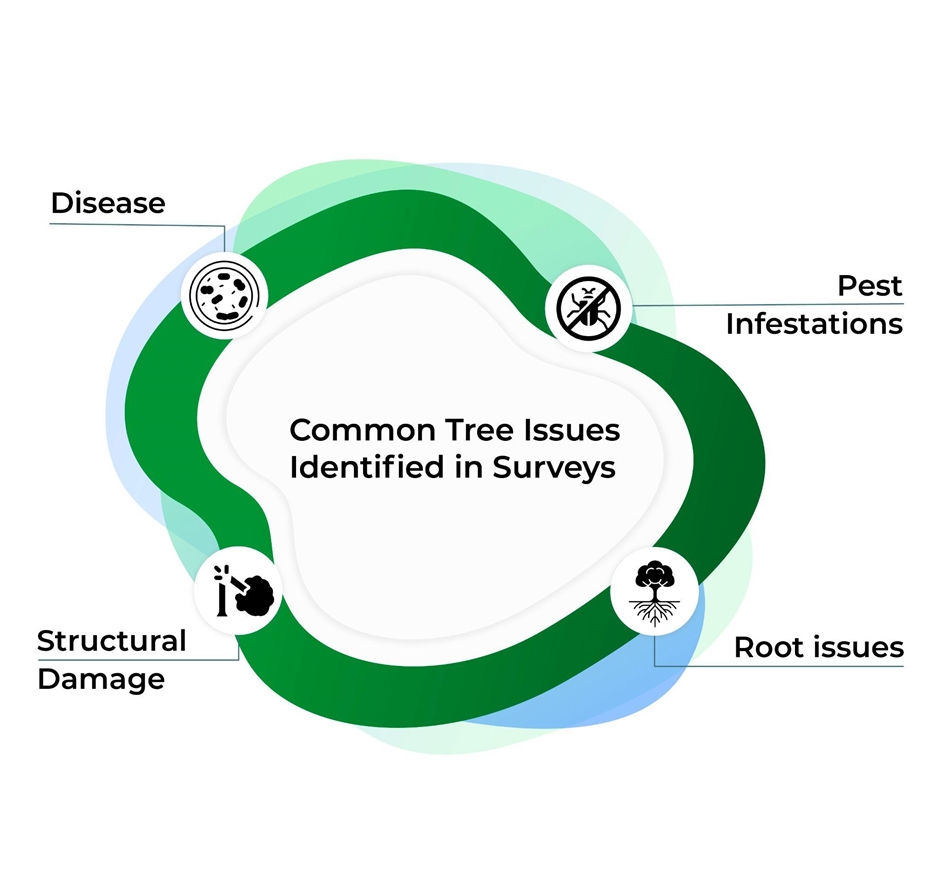
Tree surveys provide valuable insights into various issues that could affect the trees' health or pose a risk to the surrounding area. Among the most common problems identified during a survey are diseases, pests, and physical damage. Trees can suffer from a range of diseases that affect their health, from fungal infections to root rot. By identifying these issues early, a tree survey allows for prompt treatment, which can help prevent the disease from spreading or worsening.
Pests are another concern that tree surveys can detect. Insects and rodents can cause significant damage to trees, feeding on the bark or roots and leaving the tree vulnerable to further harm. A tree survey will help identify these infestations, allowing for effective pest control measures.
Additionally, physical damage caused by storms, heavy winds, or construction activities can be detected during the survey. The arborist will look for broken branches, cracks in the trunk, or root damage that might compromise the tree's stability. In some cases, trees may also need to be pruned to remove any hazardous branches or to improve their overall structure.
Finally, a tree survey can identify any risks related to the tree’s structural integrity. This includes checking for leaning trees, signs of root damage, or any other factors that might indicate a higher risk of the tree falling or losing branches.
How Can a Tree Survey Help Property Owners?
A tree survey is an invaluable tool for property owners, helping them to manage and maintain the health and safety of their trees. One of the key benefits is that a tree survey can prevent potential hazards. By identifying risks early, property owners can take action before an issue becomes serious. For example, if a tree is at risk of falling or if it has dangerous branches that might fall during a storm, a tree survey will pinpoint these problems, allowing property owners to remove the threat before it causes harm.
Another benefit of tree surveys is that they help to maintain the health of the trees. Regular surveys allow for early detection of diseases or pests, which can then be addressed promptly, helping the trees to thrive for longer. Additionally, a well-maintained tree can increase the aesthetic value of a property, which is particularly important for homeowners or businesses who want their property to stand out.
If you are planning construction or landscaping projects, a tree survey can help you understand which trees need to be preserved and which might need to be removed. This is essential for complying with local regulations and ensuring that any development work doesn’t negatively impact the health of the trees or the environment around them.
Finally, tree surveys can help property owners avoid costly damage to their property. A tree survey will detect any risks, such as branches that are too close to a building or power lines. By addressing these risks before they become an issue, property owners can prevent expensive repairs and ensure the safety of their property.
What Are the Different Types of Tree Surveys?
There are several types of tree surveys, each designed to meet specific needs. The most common types of tree surveys include arboricultural surveys, tree risk assessments, pre-development surveys, and tree condition surveys.
Arboricultural Survey
An arboricultural survey is a comprehensive assessment of the health and condition of the trees. It typically includes details about the species, size, age, and health of the trees, as well as any potential risks. This type of survey is often required for planning applications and development projects.
Tree Risk Assessment
A tree risk assessment is specifically focused on evaluating the potential risks posed by trees. It looks at factors such as the likelihood of tree failure, the risk of falling branches, and any other potential hazards that might affect nearby buildings or people. This type of survey is often used for trees located near public areas or structures.
Pre-Development Survey
A pre-development survey is conducted when planning construction or development work. It assesses the trees on the site and determines which ones need to be preserved and which might need to be removed. This survey helps ensure that the development work does not negatively impact the environment or violate local regulations.
Tree Condition Survey
A tree condition survey is a more focused assessment that looks specifically at the health and condition of the trees. It is useful for identifying any diseases, pests, or physical damage that may need to be addressed.
How Do I Know If I Need a Tree Survey?
If you are a property owner with trees on your land, booking a tree survey is an excellent way to ensure your trees are healthy and safe. You may need a tree survey if you are planning any construction or development work, if you're concerned about the health of your trees, or if you want to ensure that your trees are safe and well-maintained.
A tree survey is particularly important if you have trees located near buildings, roads, or public spaces, as it helps assess the risks they might pose. If you’re managing a large property with multiple trees or if you're unsure about the condition of your trees, a tree survey can provide the insights you need to make informed decisions about maintenance and care.
Why Book a Tree Survey with Arbour Services?
At Arbour Services, we specialise in offering comprehensive tree surveys and assessments. Our team of qualified arborists is dedicated to providing you with a detailed analysis of the health, stability, and risks associated with the trees on your property. Whether you're concerned about tree health, planning a development project, or simply want to ensure the safety of your trees, we are here to help.
If you’re ready to book a tree survey or need more information, contact us today. Based in Glasgow, we serve the surrounding areas with expert tree care services and offer tailored solutions for all your arboricultural needs.


Tree surveys seem less about paperwork and more about preventing small uncertainties from becoming costly risks later. The phrase boku casinos not on gamstop fits a different online discussion, yet both contexts show why people should understand conditions clearly before making decisions that affect safety or responsibility.