
How Tree Surgeons Help Protect Your Property from Storm Damage
- Arbour Services

- Apr 30, 2025
- 5 min read

Despite being a natural weather condition, storms can leave a trail of destruction in their wake. Whether it’s gale-force winds, lightning or torrential rain, trees can suffer from significant storm damage, putting lives and property at risk.
In this article, we will explore the crucial role professional tree surgeons play in protecting trees and properties from storm-related damage. From branch trimming and tree surveys to removing weak or dangerous trees ahead of a potential storm, tree maintenance is crucial for improving safety during storms and preventing expensive damage.
The Impact of Storm Damage
The health and structural integrity of a tree determines how well it can withstand storm conditions. Healthy, well-maintained trees of a certain maturity should be able to handle strong winds and heavy rains without experiencing substantial damage.
However, a neglected tree or one with a structural weakness may not hold up so well in challenging conditions. This can lead to a number of issues, such as broken branches or uprooted trunks. Falling branches or the entire tree collapsing not only risks the life of the tree but can present a serious hazard to nearby structures, cars or people.
That’s why routine tree maintenance and surgery is essential to keep trees in a safe condition and reduce the likelihood and severity of storm damage.
Tree Surveys to Assess Tree Health
Tree surveys can be performed at any time, even when there may not be seemingly anything wrong with your trees. During these assessments, tree surgeons can identify any issues with the tree that might make it vulnerable to storm damage. When these tree surveys are performed proactively, preventative actions can be taken to make the tree more safe and stable.
However, tree surveys can also be performed to assess the damage after a storm has occurred. If you have not had a tree survey performed, but find yourself with a damaged tree following a storm, you may require a survey to understand the current condition of your tree and what action should be taken to improve its safety and overall health.
Deadwood Removal

One of the most commonly performed tree surgery tasks involves deadwood removal and branch trimming. Deadwood is a tree or a part of a tree that has died, often giving branches a dry and brittle appearance and making them susceptible to breakage. As this part of the tree is no longer alive, it cannot grow leaves or needles and may be missing bark. Deadwood can fall at any given moment, while weak branches are more likely to break off when they are subjected to high winds.
Proactively removing dead or weak branches prevents them from falling unexpectedly during a storm, reducing the potential risk of damage. Likewise, removing unhealthy branches from the tree helps to improve the stability of the tree, making it more likely to withstand heavy rain and wind.
Crown Thinning
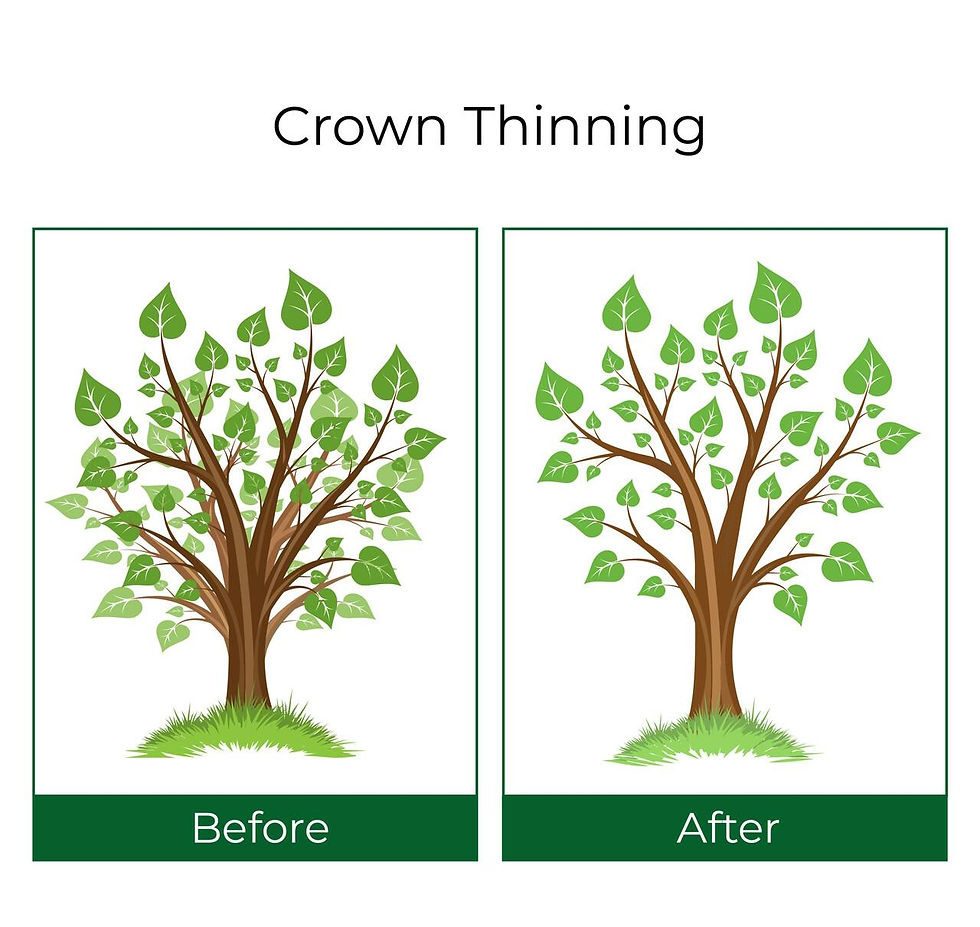
Another technique commonly used by arborists is crown thinning. This tree pruning service involves selectively removing some of the branches within the crown. The tree crown, also known as the canopy, which is located at the top of the tree, is formed of branches that support the leaves needed for photosynthesis. The crown also helps to filter out dust and particles, shade the tree from excessive heat and control the amount of rainwater the soil receives.
However, when a tree crown has particularly dense foliage, it can make the tree susceptible to damage caused by strong winds. Removing a number of branches and leaves from the crown helps to thin out the canopy, thus allowing wind to pass through the tree more easily, decreasing the impact the wind has against the tree, lowering the chance of branch breakage or the tree being uprooted by the impact.
Crown thinning is also a part of routine preventative tree care as it enables more sunlight and airflow to the inner branches, helping reduce the risk of tree diseases and promoting healthy growth.
Crown Reduction
Tall or widely spread trees pose a greater risk of instability during storms. Trees with expansive, widespread canopies and dense foliage are inherently top-heavy. This top-heaviness increases their vulnerability to uprooting during storms, as the large crown acts like a sail, catching the wind and exerting significant leverage on the tree's base.
Conversely, tall trees with long, slender trunks are more susceptible to bending and snapping under the force of strong winds. Their height and relatively thin trunks make them more likely to sway and buckle, especially if the wood is weakened by disease or decay.
Where tree height or size makes the tree unbalanced, crown reduction is recommended. This task involves pruning the outer branches of the tree to reduce the size and weight of the canopy. This enhances stability and reduces the chance of the tree being pulled down by strong winds.
Crown reduction can be performed as a tree grows to ensure it does so in a controlled, balanced manner. This helps to prevent branches from becoming too long or weak, posing a threat to surrounding structures.
Addressing Root Issues
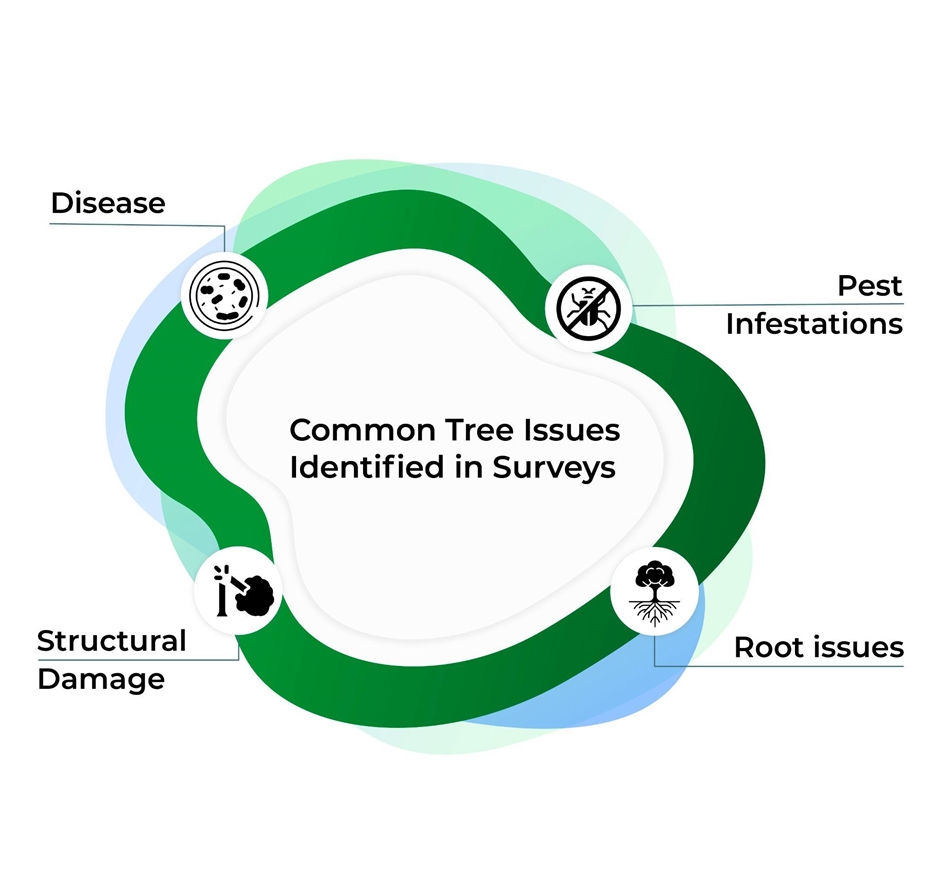
A tree’s root system plays a key role in its stability. However, poor soil conditions, soil compaction or tree diseases can damage the roots, affecting their ability to stabilise the tree.
During a tree survey, arborists can check the condition of the roots and soil, allowing any issues to be identified and addressed. With a clear understanding of what is causing the root issues, measures, such as fertilisation or aeration, can be taken to improve soil and root health and reinforce the tree’s foundation.
By focusing on the health and stability of the root system, tree surgery helps ensure the roots can provide adequate support to withstand stormy conditions in the future, preventing it from toppling over, a significant risk in waterlogged soil during periods of heavy rain.
Preventing Tree Diseases
Tree diseases can significantly compromise a tree's structural integrity, making it more susceptible to damage during storms. These diseases often weaken the tree's internal wood or root system, reducing its ability to withstand strong winds, heavy rain, and other severe weather conditions.
Regular tree surveys and professional tree surgery play a crucial role in detecting and addressing tree diseases before they cause significant harm. Tree surveys involve a thorough inspection of the tree by qualified arborists, who will assess the tree's overall health and look for signs of disease, such as discolouration or fungal growth.
If a disease is detected, arborists can recommend and perform the necessary tree surgery treatments to address the issue and mitigate the risk of storm damage. These may include pruning to remove infected branches, applying treatments to control the disease, or, in severe cases, removing the tree entirely.
Early detection and treatment of tree diseases are essential for preventing the disease from spreading throughout the tree or surrounding trees. Some tree diseases can spread rapidly, risking extensive damage to the tree's structure and increasing the likelihood of storm damage.
Experienced Arborists and Tree Surgeons in Glasgow
Keep your trees healthy and your property safe with Arbour Services. As experienced tree surgeons in Glasgow and the surrounding areas, our qualified arborists provide comprehensive care to ensure your trees are in top condition.
Through detailed tree surveys, expert branch trimming, crown reduction and more, we identify and mitigate potential weaknesses that could make your trees susceptible to storm damage. Arbour Services proactively manages your trees, providing professional care and peace of mind against unforeseen weather events.
Contact us to discuss your requirements or to learn more about our comprehensive tree surgery services.


Comments